1
2
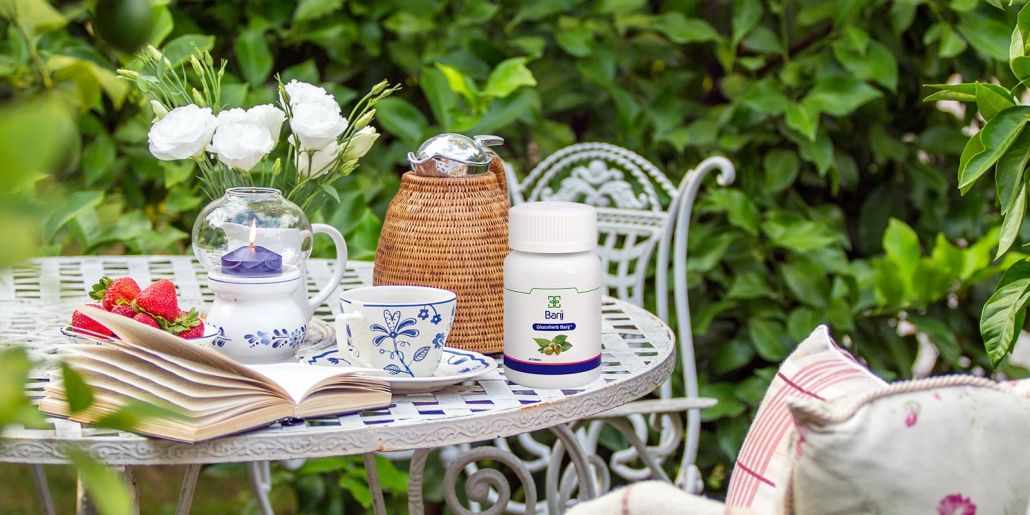
گلوکوهرب باریج
1

Blood sugar lowering

2

Consists of nettle extract, salt grass, walnut leaves, olives

Blood sugar lowering with

Barij glucocorticoid tablets

Blood sugar lowering

محصولات قلب و عروق

Product shape

468 mg tablets in a medicine container with a leaflet
Standardized based on the presence of at least 1.1 mg of chlorogenic acid and at least 6 mg of oleuropein per tablet

Product components

Nettle plant extract
(Urtica dioica )

Saline grass
(Atriplex halimus)

Walnut leaf
(Juglans regia)

olive (Olea europaea)

Active ingredients: chlorogenic acid, oleuropein, tannin

Possible side effects

No side effects have been reported.

Theoretically, concomitant use with antihypertensive drugs will enhance their effect.

Method of Use

The recommended dose for adults is one pill 3 times a day.

1

Diabetes is a growing public health concern around the world and is on the rise. The prevalence of diabetes is projected to increase from 4% in 1995 to 5.4% in 2025.

More than five million people in the country have diabetes.

The disease causes significant disability, mortality and long-term complications and is an important risk factor for cardiovascular disease.
Due to the increasing obesity of children and adults in today’s societies, it seems that diabetes will become more prevalent in the next decade.
Therapeutic goals in diabetic adults are: glycemic control (HbA1C <7%), pre-meal blood sugar 70-30 and post-meal blood sugar less than 180 mg / dL, blood pressure control
(Less than 130: 80 mm Hg) and LDL control of blood lipids) less than 100, HDL in men over 40 and in women more than 50 and triglycerides less than 150 mg / dl;
Therefore, different drugs and nutrition methods are used. The use of herbal remedies to help treat diabetes is common.
About 26 plant species used in the treatment of diabetes, walnuts, fenugreek, olives and nettles are strongly recommended, so the extract of these plants has been used in the formula of Baroque Glucoab.
The safety of consumption of these 4 plants is evident due to their long use in the medicine of nations.
In Europe and the Middle East, there is evidence for the treatment of hyperglycemia by the tannins and phenolics found in walnut leaves. Walnuts seem to slow down the digestion and entry of sugar into the bloodstream.
In vivo and in vitro studies, the safety of taking Glucolevel (a similar sample of Glucoleb Barige) to lowering blood sugar has been investigated:
In LDH test, no toxic effects were observed in human fibroblasts treated with increasing concentrations of this drug. In vivo studies, similar results were observed in rats (LD50: 25g / kg).

2

Due to the increase (doubling) of glucose uptake by yeast cells and inhibition of intestinal absorption of glucose (approximately 49%) in rat intestine, the anti-diabetic effects of the drug have been identified.
In addition, compared to positive control, 2-3 weeks of treatment in streptozotocin-induced diabetic rats significantly reduced blood sugar (from more than 400 50 50 mg / dL to 210 22 22 mg / dL, p <0.001 And a significant improvement in glucose uptake in the glucose tolerance test.
Also, in 16 volunteers aged 48-67 years, with a recent diagnosis of type 2 diabetes who were on only diet, taking 3 tablets a day for 4 weeks significantly reduced the basal blood sugar level from 290 40 40 mg / dl. 210 20 20 mg / dl was used in the first week.
At the beginning of the study, the blood sugar of a group of 11 participants was less than 300 and in the rest more than 300 mg. Clinically, in the first group, acceptable glucose levels were obtained during 2-3 weeks of treatment and in the second group during the fourth week of treatment and no side effects were reported.
In addition, a significant decrease in HbA1C (from 8.2 03 1.03 to 6.9 94 0.94) was observed in 6 patients.
The results of this study showed the safety of use, acceptability and effectiveness of the herbal composition of the drug, which seems to have a different mechanism for regulating glucose homeostasis, but have a synergistic effect and cause a normal balance of blood sugar.
The possible mechanisms of the herbs used in this medicine may be as follows:
The main active ingredient in olive leaves is oleuropeoside, which at a dose of 16 mg / kg, in addition to lowering blood pressure and blood lipids, has a detectable hypoglycemic effect.
Walnut leaf tannins and polyphenols are powerful antioxidants and are responsible for the powerful accumulation of superoxide and hydroxyl radicals.
In an animal model of diabetes and obesity, saline has been shown to be a very effective anti-diabetic plant, as well as potentiating the effects of insulin.
Nettle extract has hypoglycemic effects and improves glucose tolerance.
In vitro experiments have shown that this drug facilitates the entry of glucose into yeast cells during anaerobic fermentation, which is attributed to the saline grass in the drug.
Nettle may reduce glucose production by the liver, while olive leaf oleuropein and walnut leaf tannins act as alpha-glucosidase inhibitors and reduce intestinal carbohydrate absorption.

Reviews

There are no reviews yet.

Be the first to review “barij glucoherb
Blood sugar lowering

Your email address will not be published. Required fields are marked *

 Customers’ voices

+98-21-49921

ENG | Footer 1  ENG | Footer 2  ENG | Footer 3  ENG | Footer 4  ENG | Footer 5  ENG | Footer 6

customer services

Report problems

About Barij

لوگو باریج اسانس
Salamat color

About Barij

Barij Essential Pharmaceutical Company is a manufacturer of herbal medicines and the first pharmaceutical knowledge-based company in the country. This company was established in 1992 with the aim of improving and promoting the health of the community.

Factory: Kashan Mashhad Ardehal | Phone: 4002 (086)

Tehran Office: Marzdaran St., between Ariafar and Sarsabz, No. 78

The use of content is prohibited only for non-commercial purposes and with reference to the source. All material and intellectual rights of this site belong to Barij Essence Holding.

ENG | Footer 7 ENG | Footer 8 ENG | Footer 9 ENG | Footer 10 ENG | Footer 11 ENG | Footer 12 ENG | Footer 13 ENG | Footer 14 ENG | Footer 15 ENG | Footer 16 ENG | Footer 17 ENG | Footer 18 ENG | Footer 19 ENG | Footer 20