1
2
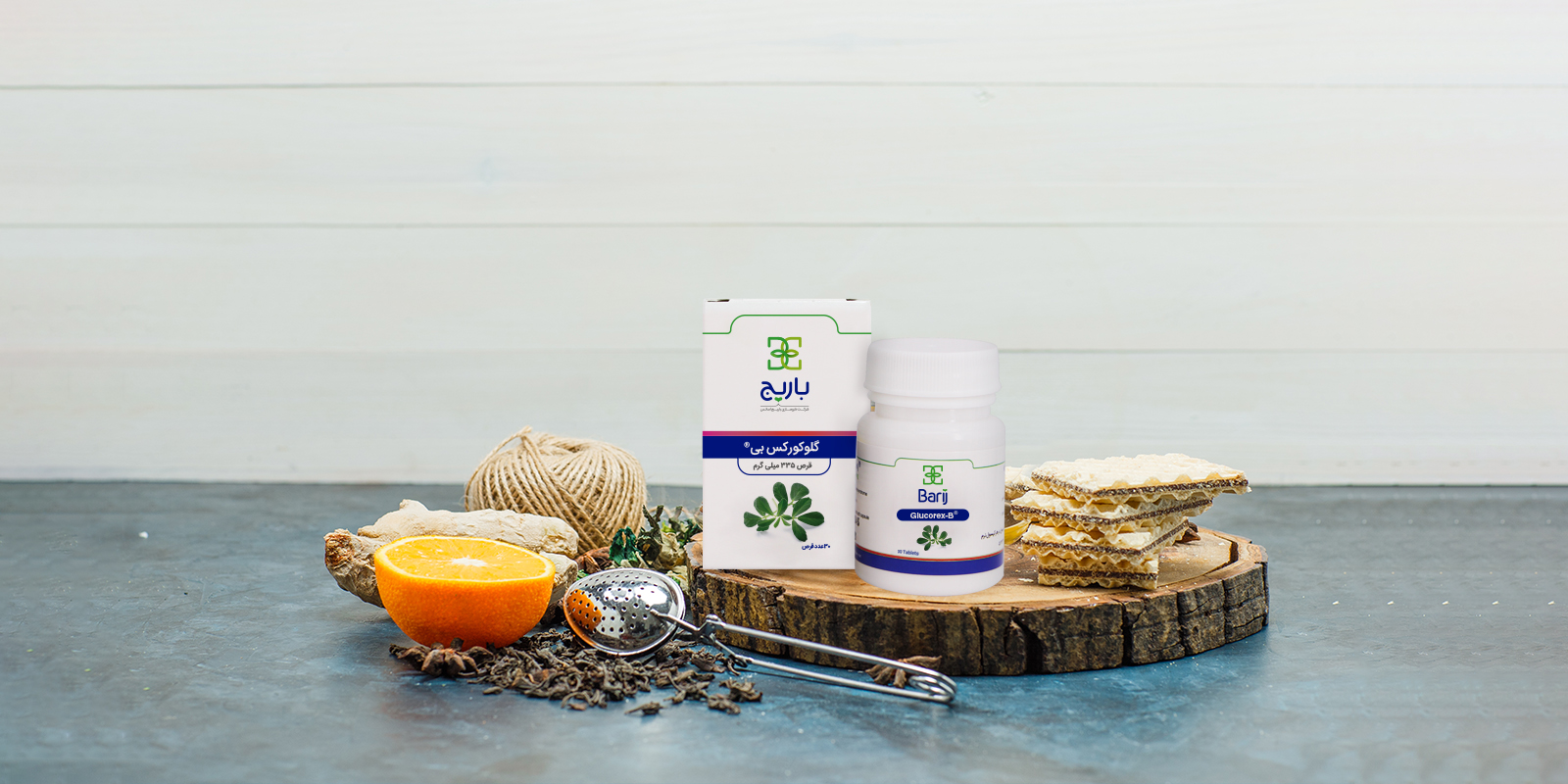
گلوکورکس بی باریج
1

Consists of dried fenugreek seed extract

2

Herbal treatment of diabetes

Herbal treatment of diabetes

Glucorx Barrage tablets

Adjuvant therapy in patients with type 2 diabetes

Reduction of triglycerides and LDL

Increased HDL

محصولات قلب و عروق

Product shape

335 mg tablet in medicine container with brochure in cardboard box
Standardized based on the presence of 4.46 micrograms of luteolin per tablet

Product components

Dry extract of fenugreek seeds (Trigonellafoenumgraecum)

Method of Use

The usual dose of this product is one tablet 3 times a day.

Possible side effects

Mild gastrointestinal symptoms such as diarrhea and bloating have been observed, which resolve after 3-4 days.
Allergic reactions have been reported rarely.The following interactions are possible:
a. Concomitant use of Glucorx-B with antihypertensive drugs increases the effect of these drugs, which is considered a potentially beneficial effect if blood glucose is closely monitored.B. Concomitant use of Glucorex-B with iron-containing products inhibits iron absorption, so iron supplements should be taken 2 hours immediately after taking Glucorex-B.J. Because fenugreek contains coumarin, there is theoretically a concern that concomitant use of fenugreek with warfarin may increase the risk of bleeding, but this is unlikely to occur. In a placebo-controlled study; Fenugreek has no effect on platelet aggregation, fibrinolytic activity or fibrinogen.

1

Diabetes mellitus (Diabetes mellitus) is a group of metabolic disorders characterized by hyperglycemia due to impaired insulin secretion or function. The prevalence of type II diabetes in Iran is about 8.9%, which increases by 1% annually, and the age of onset in Iran is 15 years lower than the global average.All synthetic blood sugar-lowering drugs have side effects, such as hypoglycemia and weight gain due to sulfonylureas, gastrointestinal symptoms (nausea, abdominal pain, and diarrhea), lactic acidosis, and vitamin B12 deficiency due to metformin, as well as bloating and liver necrosis due to inhibitory drugs. Alpha glucosidase.Numerous herbs have been shown to reduce blood sugar and have been shown to be effective in clinical trials.Certainly, different strategies are used in the management of blood sugar control in diabetic patients and it is important to pay attention to herbal medicines in this section because it can be used as an effective adjunct in lowering blood sugar and reducing drug side effects and increasing capacity. Patient acceptance is effective.Fenugreek seeds have anti-diabetic and cholesterol-lowering effects in animal and human models. These effects are largely attributed to the fenugreek saponins and their high fiber content and probably have nothing to do with its main alkaloid trigonelline.The antihypertensive effects of delayed gastric emptying are related to the fiber content and unknown components that inhibit carbohydrate-digesting enzymes. In vivo administration of fenugreek may increase plasma insulin levels. In vitro, its major free amino acid, hydroxyisoleucine, stimulates insulin secretion from the pancreas.

2

The cholesterol-lowering effect has been attributed to the increased conversion of liver cholesterol to bile salts due to fecal loss and complexation of these substances with fenugreek fiber and saponins. Fenugreek treatment selectively reduces LDL and VLDL, increases in alloxan-induced diabetic rats and patients with type II diabetes following HDL fenugreek treatment. There are no reports of toxic effects from fenugreek consumption. Therefore, its regular consumption may be useful in the management of diabetes treatment and prevention of atherosclerosis and coronary heart disease.

In 2005, a product made from the aqueous extract of fenugreek seeds (FSE) was reviewed by Vijayakumar et al. The results of this study showed that in vivo the hypoglycemic effect of FSE is at least in part, by activating an insulin signaling pathway in adipocytes and hepatocytes.

In the study of long-term effects (effect of multiple doses) of FSE product on blood sugar and body weight and short-term effect (effect of single dose) on serum insulin and liver enzymes in experimental diabetes mice, it was found that FSE works outside the pancreas. And FSE product corrects metabolic changes associated with diabetes with insulin-like properties and has potential for clinical applications.

3

The hypoglycemic effect of fenugreek seeds has been well established in laboratory animals and humans. In patients with diabetes; Fenugreek lowers fasting blood sugar and postprandial blood sugar.
However, it is not known whether the improvement in glucose tolerance is due to the effect of fenugreek on glucose uptake or metabolism. Therefore, a cross-sectional metabolic study was performed and diet for 15 days with or without 25 grams of fenugreek was randomly given to 10 patients with non-insulin dependent diabetes.An intravenous glucose tolerance test (GTT) at the end of each study period showed that diet fenugreek significantly reduced the area under the plasma glucose curve (half-life) and increased metabolic clearance.In addition, fenugreek increases insulin receptors in red blood cells. These results suggest that fenugreek can improve environmental glucose uptake, which helps improve glucose tolerance.Therefore, fenugreek may exert its hypoglycemic effect by acting on the insulin receptor as well as on the surface of the gastrointestinal tract.In order to evaluate the efficacy and safety of total fenugreek saponins (TFGs) in combination with sulphonylureas in the treatment of patients with type 2 diabetes that were not well controlled with sulphonylureas alone, 69 patients were randomly assigned to the control group (n = 46); ) And received TFGs or placebo three times a day for 6 weeks, 6 tablets each time.Meanwhile, patients continued to take major antihypertensive drugs. Indices of effect on patient symptoms in traditional Chinese medicine, fasting blood sugar (FBG), 2 hours postprandial blood sugar (2h PBG), glycosylated hemoglobin (HbA1c), quantitative scores of clinical signs (CSQS), body mass index (BMI), Liver and kidney function were also assessed and compared with before and after treatment.In the treatment group, the effect on patient symptoms in traditional Chinese medicine was significantly better than the control group (P <0.01) and there was a statistically significant decrease in FBG, 2h PBG, CSQS and HbA1c in the treated group compared to the control group (P <0.01). <0.05 or P <0.01) was present,While no significant difference was found between the two groups in body mass index, liver and kidney function.The researchers concluded that combination therapy with total fenugreek and sulfonylurea saponins could lower blood glucose levels and improve the clinical signs of type 2 diabetes, making it relatively safe.

4

In order to evaluate the effects of fenugreek seeds on glycemic control and insulin resistance (determined by the HOMA model) in mild to moderate types of type 2 diabetes, in a double-blind, placebo-controlled study of 25 newly diagnosed patients with type 2 diabetes (diabetes) Fasting blood (less than 200 mg / dL) were randomly divided into two groups.The first group (12 patients) received 1 gram per day of hydroalcoholic extract of fenugreek seeds and the second group (13 patients) received routine care (diet control, exercise) and placebo capsules for two months.At the beginning of the study, both groups were similar in terms of anthropometric criteria and clinical variables. Oral glucose tolerance test, fat content, fasting peptide-c, glycosylated hemoglobin and HOMA insulin resistance model were similar at the beginning of the study.At the end of two months, in group 1 compared to group 2, fasting blood sugar (148.3 +/- 44.1 to 119.9 +/- 25 vs. 137.5 +/- 41.1 to 113.0 +/- 36.0) and blood sugar 2 The hour after glucose uptake (210.6 +/- 79.0 to 181.1 +/- 69 vs. 219.9 +/- 41.0 to 241.6 +/- 43) was no different.But the level below the blood sugar curve (2375 +/- 574 vs 27597 +/- 274) as well as insulin (2492 +/- 2536 vs. 5631 +/- 2428) was significantly lower (p <0.001). Insulin resistance inferred from the HOMA model decreased beta cell secretion in group 1 compared to group 2 (3.86 +/- 32 vs. 70.1 +/- 52) and increased percentage of insulin sensitivity (112.9 +/- 67vs 92.2 +/- 57).(p <0.05) in group 1 compared to group 2 significantly decreased serum triglyceride and increased HDL (p <0.05). The researchers concluded that adjuvant use of fenugreek seeds improves glycemic control and reduces insulin resistance in patients with mild type 2 diabetes. It also has a beneficial effect on increased triglycerides.

Reviews

There are no reviews yet.

Be the first to review “glucorex-b-tablet”

Your email address will not be published. Required fields are marked *

 Customers’ voices

+98-21-49921

ENG | Footer 1  ENG | Footer 2  ENG | Footer 3  ENG | Footer 4  ENG | Footer 5  ENG | Footer 6

customer services

Report problems

About Barij

لوگو باریج اسانس
Salamat color

About Barij

Barij Essential Pharmaceutical Company is a manufacturer of herbal medicines and the first pharmaceutical knowledge-based company in the country. This company was established in 1992 with the aim of improving and promoting the health of the community.

Factory: Kashan Mashhad Ardehal | Phone: 4002 (086)

Tehran Office: Marzdaran St., between Ariafar and Sarsabz, No. 78

The use of content is prohibited only for non-commercial purposes and with reference to the source. All material and intellectual rights of this site belong to Barij Essence Holding.

ENG | Footer 7 ENG | Footer 8 ENG | Footer 9 ENG | Footer 10 ENG | Footer 11 ENG | Footer 12 ENG | Footer 13 ENG | Footer 14 ENG | Footer 15 ENG | Footer 16 ENG | Footer 17 ENG | Footer 18 ENG | Footer 19 ENG | Footer 20