1
2
ای پی او باریج
1

Adjuvant treatment of premenstrual syndrome (PMS) and menopausal hot flashes

2

Consists of evening primrose oil

Evening primrose oil

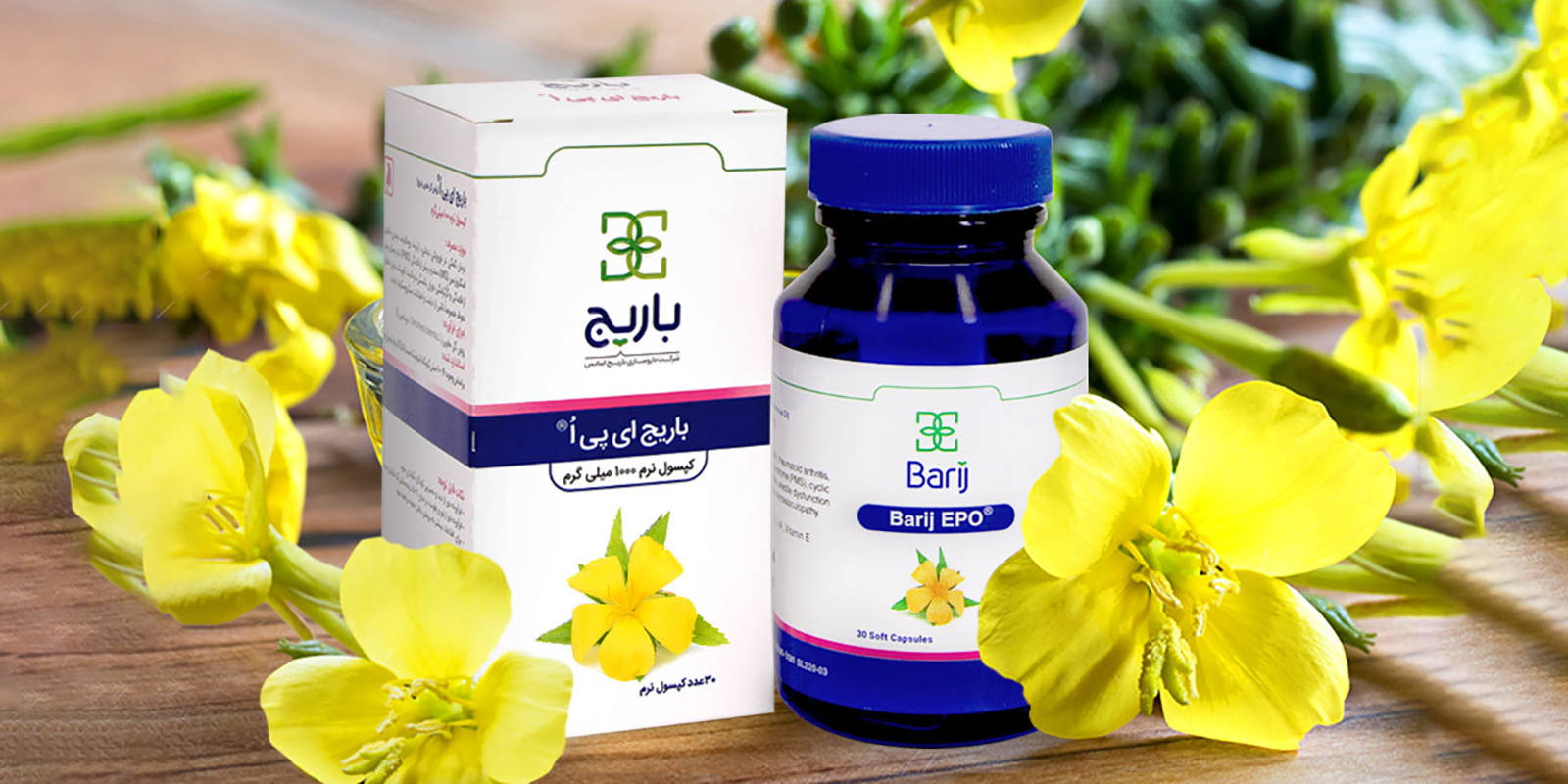
Barraj EPO soft capsule

Adjuvant treatment of premenstrual syndrome (PMS) and menopausal hot flashes
Adjuvant treatment of diabetic neuropathy and erectile dysfunction in diabetic patients
Improving the symptoms of rheumatoid arthritis and multiple sclerosis (MS)

محصولات تنفسی

Product shape

1000 mg soft capsule in medicine container with brochure in cardboard box
Standardized based on the presence of 140-70 mg of gamma linolenic acid (GLA) in each soft capsule

Possible side effects

No side effects or drug interactions have been reported.
Do not use this drug if there is a known allergy to the components of the product.

Product components

Evening primrose oil

Active ingredients: gamma linolenic acid

Method of Use

Twice a day, 1-2 times each or as directed by your doctor

1

Clinical trials have shown the benefits of evening primrose oil (EPO), which is a source of GLA, in cases such as diabetic neuropathy, hypertension, breast pain, premenstrual syndrome, menopausal hot flashes, atopic dermatitis, osteoporosis and dementia. . Evening primrose oil has anti-inflammatory effects; Correction of omega-6 essential fatty acid deficiency; Improving the synthesis of vasodilators; Correction of nerve blood flow and defects in nerve conduction velocity in diabetic patients. GLA is one of the essential fatty acids that the body is unable to produce and like vitamins it must reach the body through food and supplements. Part of the beneficial properties of this product is due to the increased production of prostaglandin E1, which has anti-inflammatory effects. The following are the results of several clinical trials.
During the 17 years to 1992 at the Cardiff Mastalgia Clinic, patients with periodic pain and 90 patients with non-periodic breast pain; They received various drug treatments in clinical trials. In patients who responded to treatment, danazol was the most effective drug (approximately 70%) and bromocriptine and evening primrose oil had the same effect (approximately 45%). Patients receiving evening primrose oil also reported fewer side effects.
In parallel, randomized, placebo-controlled, placebo-controlled trials in 7 centers in the UK and Finland, 111 patients with mild diabetic neuropathy (480 mg GLA per day) received placebo for 1 year and were tested by standard case studies. Were evaluated. In the group therapy, a significant favorable change was observed in 13 of the 16 parameters studied, indicating an obvious beneficial effect on the course of mild diabetic neuropathy. Gender, age, type of diabetes, age of onset or course of diabetes had no significant effect on outcome. However, treatment was more effective in patients with relatively well-controlled diabetes. Patients were able to continue the trial for another 12 months, and all those who participated in the course were given GLAs (indefinitely) and continued to recover during the course.

2

22 patients with distal diabetic polyneuropathy who participated in a double-blind, placebo-controlled study; They received 360 mg of GLA or placebo capsules daily for 6 months. Patients in the treatment group showed significant improvement in the symptoms of distal diabetic polyneuropathy.
In a randomized, placebo-controlled trial, 37 patients with active rheumatoid arthritis and synovitis received 1.4 g of GLA or placebo daily for 24 weeks. Compared with the placebo group in which the signs and symptoms of disease activity did not change or worsen, treatment with GLA resulted in a significant reduction in signs and symptoms of disease activity (P <0.05).
In an uninformed double-blind, placebo-controlled clinical trial, 56 patients with active rheumatoid arthritis received (2.8 g GLA per day) or placebo (sunflower oil) for 6 months. Following this step, all patients were unilaterally given GLA for 6 months. GLA treatment resulted in a significant reduction in the signs and symptoms of active disease. Compared to 4 out of 19 patients in the placebo group, for most patients in the treatment group (14 out of 22 patients) at least 25% improvement was observed in the 4 measured parameters. During the second 6 months, both groups showed improvement in disease activity.
In a clinical trial conducted in a nursing home, 40 women with confirmed osteoporosis were divided into 4 groups and for the groups fish oil, OEPO, fish oil plus EPO or olive oil (control) تج were prescribed for 16 weeks. Serum alkaline phosphatase levels decreased in the fish oil group and the fish oil group plus EPO, indicating an increase in bone mineral density. Osteocalcin, which is an indicator of bone growth, increased in the group receiving fish oil and more significantly in the group receiving fish oil plus EPO. Although EPO alone had no effect, it increased the effect of fish oil on bone formation parameters, possibly due to a higher plasma fatty acid balance.
In an uncontrolled clinical trial, 12 patients with hyperlipidemia received 3 grams of GLA daily for 4 months. After treatment; Plasma triglyceride levels decreased by 48% (P <0.001), HDL levels increased by 22% (P <0.01) and total cholesterol and LDL levels decreased significantly.

3

در یک کارآزمایی بالینی تصادفی، ۵۶ خانم یائسه ۵۹- ۴۵ سال به مدت ۶ هفته روزی ۲ کپسول ۵۰۰ میلی‌گرمی روغن گل مغربی یا دارونما دریافت نمودند. قبل از شروع درمان و در پایان دوره درمانی، با استفاده از مقیاس تأثیر گُرگرفتگی روی فعالیت‌های روزانه (HFRDIS)؛ شدت، مدت و تکرار گُرگرفتگی افراد مورد بررسی ثبت گردید.
بر اساس نتایج این مطالعه، بهبود تکرار، شدت و مدت گُرگرفتگی در گروه روغن گل مغربی به ترتیب ۳۹، ۴۲ و ۱۹ درصد و در گروه دارونما به ترتیب ۳۲، ۳۲ و ۱۸ درصد بود. اگر چه تکرار، شدت و مدت گُرگرفتگی در گروه روغن گل مغربی بهتر شده بود، فقط شدت آن به طور قابل توجهی بهتر از گروه پلاسبو بود(P<0.05). کلیه موارد مقیاس HFRDIS به طور قابل توجهی در هر دو گروه بهبود یافته بود، اما درصد بهبود در فعالیت‌های اجتماعی، ارتباط با دیگران و فعالیت جنسی در گروه روغن گل مغربی به طور قابل توجهی بهتر از گروه دارونما بود(P<0.05). محققین نتیجه گرفتند در مقایسه با دارونما، مصرف خوراکی روغن گل مغربی برای کنترل گُرگرفتگی، ممکن است شدت حملات گُرگرفتگی و مقیاس HFRDISرا بیشتر کاهش دهد.
به منظور بررسی اثرات وابسته به دوز روغن گل مغربی روی علائم کلینیکی درماتیت آتوپیک (AD) و غلظت سرمی اسیدهای چرب غیراشباع چند زنجیره‌ای، طی یک کارآزمایی بالینی، ۴۰ بیمار مبتلا به درماتیت آتوپیک به طور تصادفی در ۲ گروه قرار گرفتند و به مدت ۸ هفته روزانه ۱۶۰ میلی‌گرم یا ۲ بار در روز هر بار ۳۲۰ میلی‌گرم روغن گل مغربی را مصرف نمودند. نمره شاخص شدت ناحیه اگزما [Eczema Area Severity Index (EASI)] در همه بیماران در هفته‌های صفر، ۲، ۴ و ۸ اندازه‌گیری شد. همچنین با استفاده از کروماتوگرافی، میزان اسیدهای چرب (پالمیتیک، لینولئیک، لینولنیک و آراشیدونیک اسید) در سرم اندازه‌گیری شد. بر اساس نتایج این مطالعه، اسیدهای چرب لینولنیک و آراشیدونیک اسید به طور معنی‌داری در گروه مصرف کننده دوز ۳۲۰ میلی‌گرم بیشتر از گروه دیگر بود. بعد از درمان با روغن گل مغربی، نمره EASI در هر دو گروه کاهش یافت و بهبود نمره EASI در گروه مصرف کننده دوز ۳۲۰ میلی‌گرم بیشتر از گروه مصرف کننده دوز ۱۶۰ میلی‌گرم بود.

4

In a randomized clinical trial, 56 postmenopausal women aged 59-45 years received 2 500 mg capsules of evening primrose oil or placebo for 6 weeks. Before and at the end of treatment, using the HFRDIS scale; The severity, duration and frequency of hot flashes were recorded.
According to the results of this study, the recurrence, severity and duration of hot flashes were 39%, 42% and 19% in the evening primrose oil group and 32%, 32% and 18% in the placebo group, respectively. Although the frequency, severity and duration of hot flashes improved in the evening primrose oil group, only its intensity was significantly better than the placebo group (P <0.05). All cases of HFRDIS were significantly improved in both groups, but the percentage of improvement in social activities, relationships and sexual activity in the evening primrose oil group was significantly better than the placebo group (P <0.05). The researchers concluded that oral administration of evening primrose oil to control hot flashes may further reduce the severity of hot flashes and the HFRDIS scale compared to placebo.
In order to evaluate the dose-dependent effects of evening primrose oil on the clinical signs of atopic dermatitis (AD) and serum concentrations of polyunsaturated fatty acids, in a clinical trial, 40 patients with atopic dermatitis were randomly divided into 2 groups for 8 They consumed 160 mg of evening primrose oil 160 mg twice a day or twice a day. Eczema Area Severity Index (EASI) score was measured in all patients at weeks 0, 2, 4 and 8. Also, the amount of fatty acids (palmitic, linoleic, linolenic and arachidonic acid) in serum was measured using chromatography. According to the results of this study, linolenic and arachidonic acid fatty acids were significantly higher in the 320 mg dose group than the other group. After treatment with evening primrose oil, the EASI score decreased in both groups and the improvement in EASI score was higher in the 320 mg dose group than in the 160 mg dose group.

Reviews

There are no reviews yet.

Be the first to review “Barij EPO”

Your email address will not be published. Required fields are marked *

 Customers’ voices

+98-21-49921

ENG | Footer 1  ENG | Footer 2  ENG | Footer 3  ENG | Footer 4  ENG | Footer 5  ENG | Footer 6

customer services

Report problems

About Barij

لوگو باریج اسانس
Salamat color

About Barij

Barij Essential Pharmaceutical Company is a manufacturer of herbal medicines and the first pharmaceutical knowledge-based company in the country. This company was established in 1992 with the aim of improving and promoting the health of the community.

Factory: Kashan Mashhad Ardehal | Phone: 4002 (086)

Tehran Office: Marzdaran St., between Ariafar and Sarsabz, No. 78

The use of content is prohibited only for non-commercial purposes and with reference to the source. All material and intellectual rights of this site belong to Barij Essence Holding.

ENG | Footer 7 ENG | Footer 8 ENG | Footer 9 ENG | Footer 10 ENG | Footer 11 ENG | Footer 12 ENG | Footer 13 ENG | Footer 14 ENG | Footer 15 ENG | Footer 16 ENG | Footer 17 ENG | Footer 18 ENG | Footer 19 ENG | Footer 20